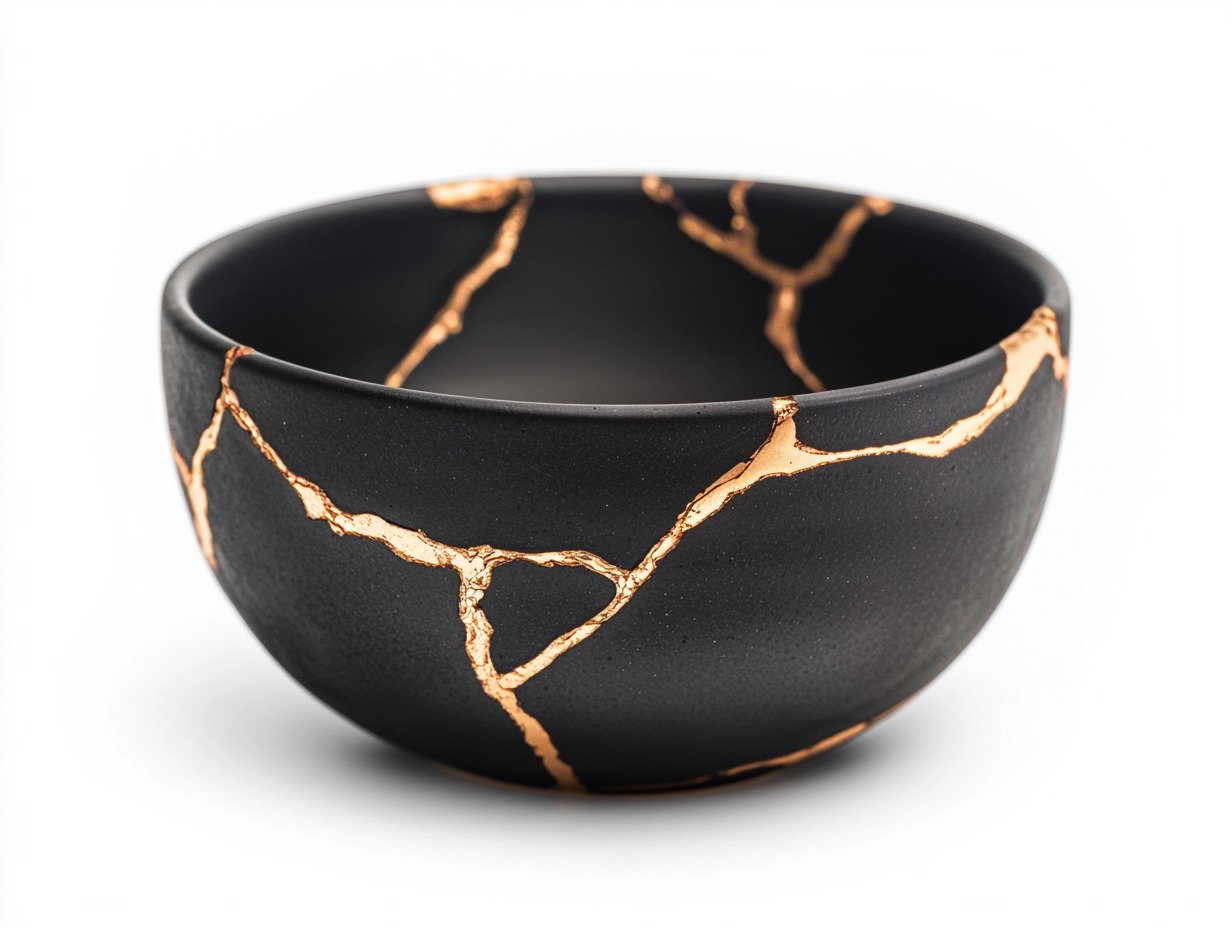
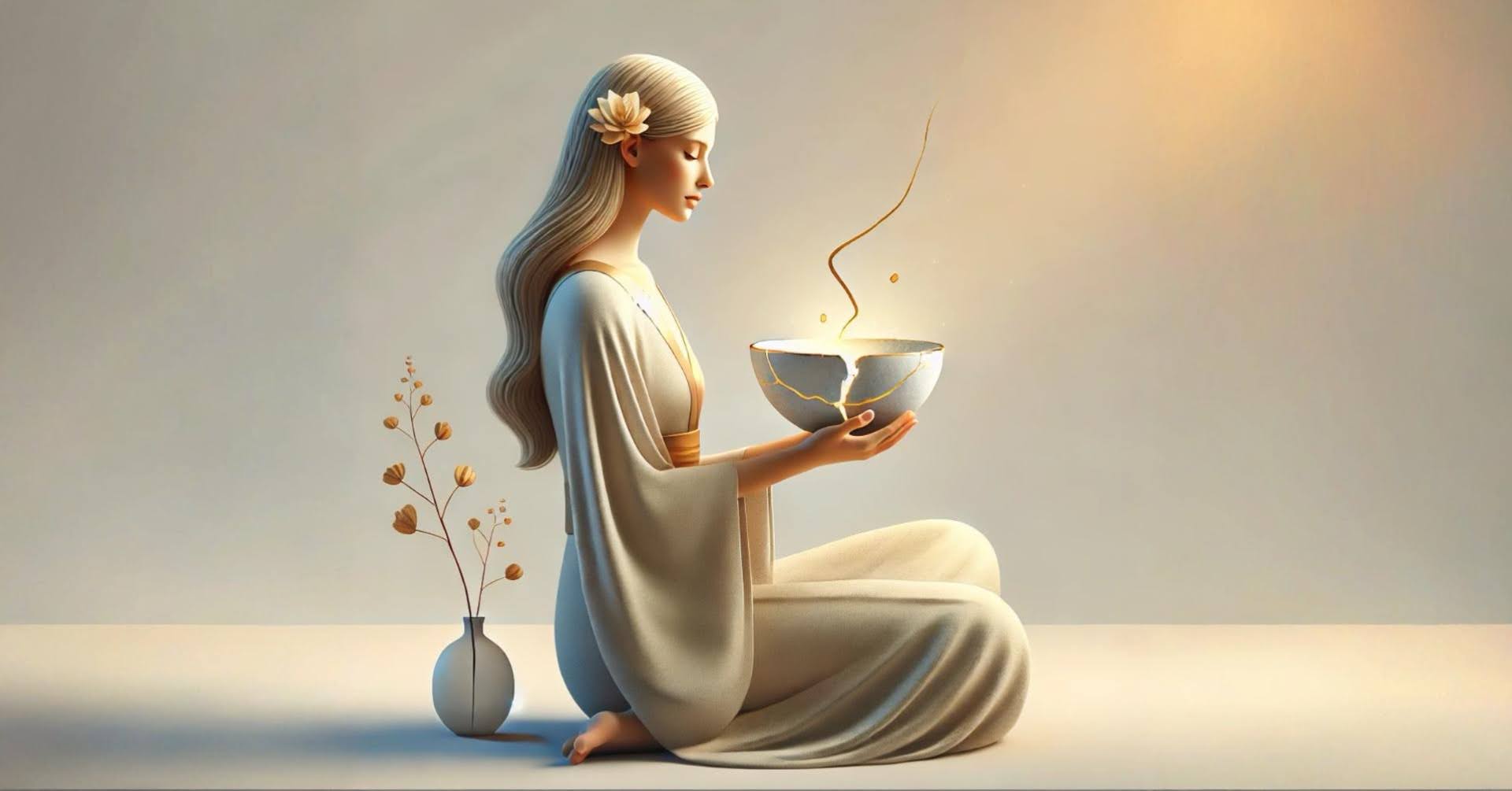
In an age of urgency, perfection, and disposability, it might seem surprising that a 15th-century Japanese art form has resurfaced with such force. And yet, Kintsugi has never felt more relevant. The art of mending broken pottery with gold does more than repair objects—it speaks to the soul of a world in search of meaning, resilience, and slowness.
Interestingly, in 2018, three books on Kintsugi and its deep meaning (including our book « Kintsugi, Finding Strength in Imperfection) were published in different corners of the world. A synchronicity that felt like a whisper from the collective unconscious—a preparation, perhaps, for the emotional rupture that would soon come with the global lockdown of 2020. Since then, Kintsugi has taken on a new resonance. As if it had been waiting for us.
A Slow and Intentional Art in a Fast-Paced World
Traditional Kintsugi is not rushed. It takes time. Each layer of lacquer must dry before the next is applied. Each fracture must be honored, not erased. In a world driven by instant results and constant acceleration, this slowness becomes a form of resistance. A meditation. A return to what matters.
It reminds us that healing—true healing—is never immediate. It takes space, breath, presence, contemplation. In this sense, Kintsugi offers not only an art, but a counter-model: one that values pause over productivity, and presence over perfection.
A Mindfulness Practice Disguised as a Repair Technique
More than a technique, Kintsugi is a Dō—a path, like Chado (the way of tea) or Shodō (the way of the brush), or even… Judo ! (the way of suppleness). It cultivates patience, attention, and humility. Each step becomes a ritual. A way to yourself
Practicing Kintsugi, whether in silence or in guided workshops, often brings a deep sense of inner alignment. The gold becomes a metaphor—but the real transformation happens inside.
A WAY TO YOURSELF
A Radical Embrace of Imperfection
Kintsugi dares to say something few philosophies say out loud: You don’t need to hide your scars. On the contrary—what tried to break you can become the very place from which your light shines. It is a radical act of self-love. In a society obsessed with flawlessness, this idea feels almost revolutionary.
To embrace one’s cracks is to reclaim one’s story. To say: this, too, is part of me—and it is beautiful.
An Answer to Our Ecological and Existential Crisis
Kintsugi also speaks to sustainability. Instead of throwing broken things away, it invites us to repair. To reuse. To revalue. In a world overflowing with waste, this shift in mindset is not only symbolic—it’s necessary.

Honor yourself
But beyond ecology, it addresses an emotional truth: we are all broken, in some way. And instead of hiding these fractures, we can choose to honor them. To reveal them with gold. To make something stronger, wiser, more beautiful.
From burnout to grief, from corporate exhaustion to personal loss, Kintsugi whispers a quiet truth that feels like a balm: You are not broken. You are becoming.
Want to explore how Kintsugi can help you heal, rebuild, and transform?
Feel free to discover our Kintsugi healing Workshops and Private Spiritual Kintsugi Coaching sessions to begin your golden path.