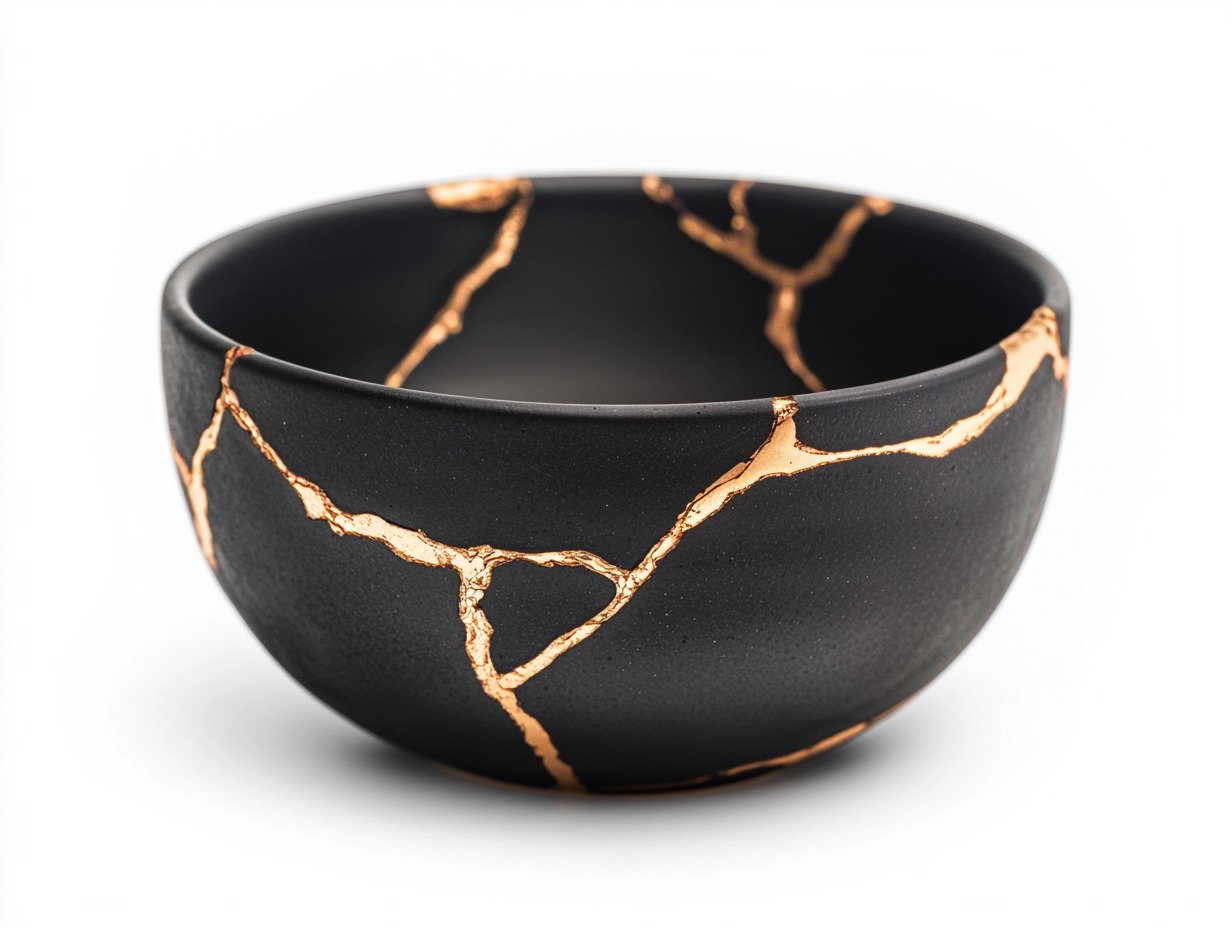
Kintsugi, the ancient Japanese art of repairing broken pottery with gold, is more than just a restoration technique—it is a philosophy of resilience, transformation, and beauty in imperfection. Rooted in wabi-sabi, the Japanese aesthetic that honors impermanence and flaws, this golden art carries a legend that continues to inspire.
The origins of Kintsugi
From break to breakthrough
According to the popular tale, Kintsugi was born in 15th-century Japan. They say that one day, shogun Ashikaga Yoshimasa (1435–1490) broke his favorite tea bowl (chawan)—a cherished item used in traditional tea ceremonies. He sent it back to China for repair, but when it returned, it had been crudely mended with heavy metal staples. The result was not only unaesthetic—it was also not even watertight! Frustrated, the shogun asked his Japanese artisans to find a better solution: something more refined, more meaningful, more beautiful.
The art of reinvention
The artisans turned to materials they already knew intimately: urushi, a natural lacquer made from the sap of the lacquer tree, and gold powder. These were not innovations, but tools passed down through generations. Urushi had been used in Japan for thousands of years, dating back to the Jōmon period (The oldest known use of urushi for decorative and protective purposes has been traced back over 9,000 years, according to archaeological findings.), to seal, strengthen, and embellish everything from bowls to armor. Likewise, the maki-e technique—decorating lacquerware with sprinkled gold or silver powder—was already an established art form.

Thinking outside the break
The result of their work was both surprising and obvious. Elegant. Creative. Deeply moving. It didn’t just fix the object—it revealed its soul. It was a radical aesthetic gesture, yet one that felt completely natural. Kintsugi turned a broken object into a masterpiece of resilience. An ordinary repair became an extraordinary metaphor.
A new vision
What these artisans did was revolutionary in its vision. Rather than hiding the break, they chose to exalt it. Rather than masking the scar, they transformed it into a golden seam. In doing so, they shifted not just the method of repair, but the entire philosophy of how we relate to damage. The crack was no longer a flaw to erase—it became a story to honor, a feature to illuminate. Kintsugi was not born from invention, but from a profound shift in perspective.
Perfectly imperfect
Today, even though this legend remains historically unverified, its symbolic resonance lives on. Whether or not Yoshimasa truly inspired Kintsugi, the story captures its spirit perfectly: out of a moment of frustration and loss came an insight so powerful that it birthed an entire philosophy. A golden seam between functionality and beauty. Between imperfection and strength—perfectly imperfect.
The legend of the broken vase
Another kintsugi tale
Another of the well-known Kintsugi legends is The Legend of the Broken Vase, a story featuring Sen no Rikyū, the revered tea master of the Japanese emperor. According to the tale, Rikyū was presented with a precious Chinese vase by his host but showed little interest, instead admiring the natural beauty of the landscape.
Contemplating imperfection
Frustrated by what he perceived as disregard, the host shattered the vase in anger. However, the host’s friends, understanding the deeper meaning of imperfection, carefully restored the vase using the art of Kintsugi. When Rikyū saw the repaired vase, now adorned with brilliant golden lines, he exclaimed, “Now it is magnificent!”

Now it’s magnificent!
every crack tells a story
This legend captures the essence of Kintsugi—an invitation to see our fractures not as flaws, but as marks of strength. Whether in objects or in life, every crack tells a story, every scar holds wisdom. Kintsugi teaches us that transformation happens not despite our challenges, but because of them. The golden seams of a repaired object mirror our own ability to heal and emerge stronger, proving that true beauty is found in resilience.
Explore the kintsugi spirit
finding inspiration
Would you like to uncover more Kintsugi legends and the philosophy behind this timeless art? Dive deeper into its profound wisdom with Kintsugi: Finding Strength in Imperfection, an international award-winning book. This transformative journey explores the lessons of resilience, healing, and self-acceptance—guiding you to embrace your own golden fractures and see the beauty in imperfection.

Your own journey of resilience
And for those eager to experience Kintsugi in a tangible, transformative way, consider joining a Kintsugi workshop or coaching session. Through hands-on practice and guided reflection, you’ll embark on your own golden repair journey—learning not only the techniques of this ancient art but also embracing its deeper philosophy of resilience, self-acceptance, and renewal.