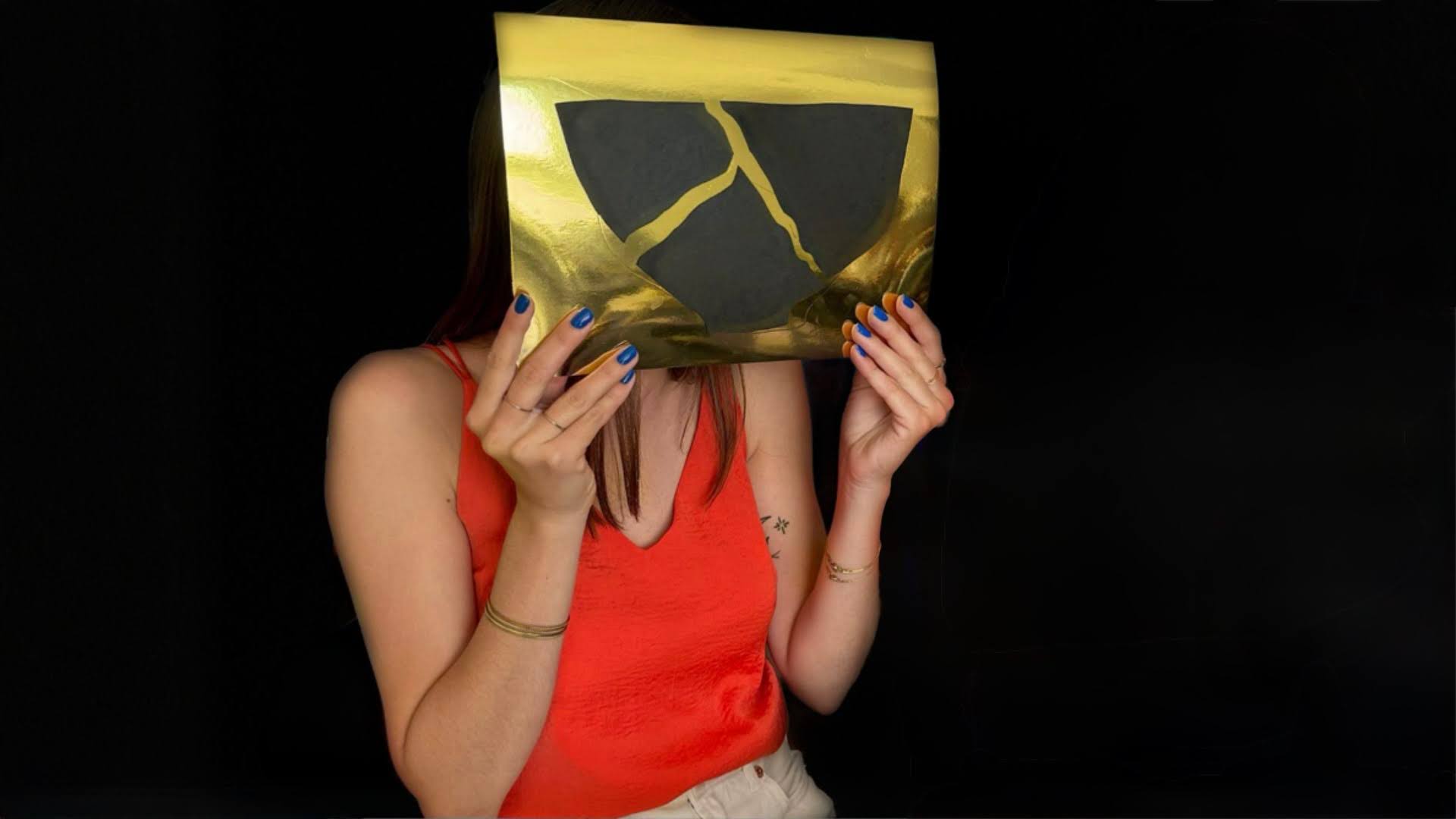
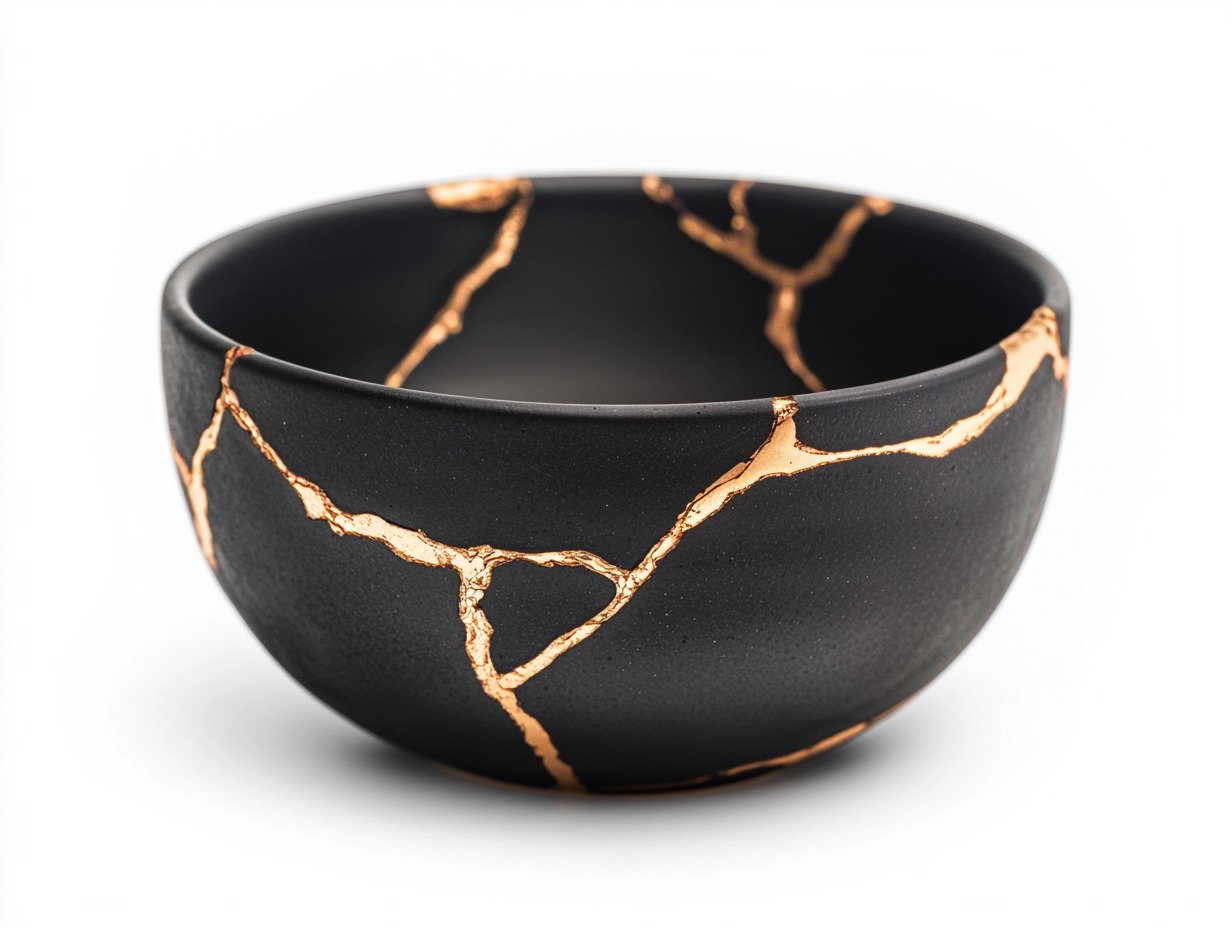
Kintsugi is the Japanese art of repairing broken objects by highlighting their cracks with gold instead of hiding them. Many people fall in love with this poetic technique at first sight, and soon feel the urge to try it themselves.
But Kintsugi is a demanding practice that calls for care, patience, and a bit of preparation—especially when it comes to the tools, the materials, and the vocabulary. Most of the words used are in Japanese, and can feel unfamiliar at first.
To help you find your way through this precise and poetic art form, here is a simple, non-exhaustive glossary of a few key definitions—a gentle introduction for beginners to the golden language of Kintsugi.
Chawan: traditional Japanese tea bowl.
Dō: the way, the path, the route, the art of living mindfully leading to enlightenment.
Gintsugi: broken objected repaired with lacquer and silver powder, highlighting the cracks.
Kintsugi: broken objected repaired with lacquer and gold powder, highlighting the cracks.
Kintsukuroi: the process of mending broken objects with gold—often used interchangeably with Kintsugi.
Konazutsu: reed or bamboo tube with a fine metal mesh, used to sprinkle gold powder evenly over the wet red lacquer coating (neri bengara-urushi).
Maki-e: decorative technique using sprinkled gold or silver powder on lacquer to create patterns.
Mugi-urushi: glue to attach the broken pieces. It consists of a blend of resin (urushi) and flour (wheat or rice). It is used when all the pieces of the broken object have been gathered.
Muro: a container, often a cardboard box, used during Kintsugi repairs to maintain optimal curing conditions for urushi lacquer. The interior environment is typically kept at a temperature between 68–82°F (20–28°C) and a relative humidity of 65–80% to facilitate proper hardening of the lacquer.
Neri bengara-urushi (often called e-urushi): red-tinted lacquer used as the final layer during Kintsugi repair, applied after the black base coats. Its color comes from red iron oxide pigment (hematite) mixed into urushi. Gold powder is gently applied—typically with a silk ball, a brush, or a tube (konazutsu)—while the lacquer is still moist, allowing it to bond before hardening
Roiro-urushi: lacquer used to refine the surface of the cracks with a few layers after the initial repair. Its color comes from black iron oxide pigment (magnetite) mixed into urushi.
Sabi-urushi: cement used to repairing, filling gaps, re-creating and replacing missing pieces, prepared from resin (urushi) and powdered stone (tonoko).
Shogun: military ruler of Japan from the 12th to the 19th century. According to legend, Shogun Ashikaga Yoshimasa (1435–1490) sparked the creation of Kintsugi.
Tintsugi: broken objected repaired with lacquer and tin powder, highlighting the cracks.
Tonoko: powdered stone blended with resin (urushi) to prepare the glue.
Toxicodendron vernicifluum: latin name of the East Asian tree from which urushi resin is extracted. Its name reflects both its nature—toxicodendron meaning “poison tree” due to the allergenic urushiol in its sap—and its use, with vernicifluum meaning “that which produces flowing varnish”.
Urushi: natural resin extracted from the lacquer tree (Toxicodendron vernicifluum), traditionally used in Japanese lacquer arts. It is initially milky-white, turns transparent when processed, and can be colored—most commonly in red (neri bengara urushi) or black (roiro urushi). In its raw state, it can cause allergic reactions, but becomes safe once fully cured in a humid environment.
Urushi-tsugi: lacquered joint with a brownish color, typically visible before being covered with metal or gold powder. Sometimes, it is intentionally left uncovered as a final aesthetic choice.
Urushiol: allergenic compound naturally present in raw urushi sap, responsible for skin reactions before the lacquer is fully cured
Wabi-sabi: the art of living recognizing the beauty of imperfect, ephemeral, and simple things.
Yobi-tsugi: using a piece from another object to replace a missing piece.
If you feel inspired to start your own Kintsugi journey, don’t hesitate to explore our resources directory for recommended materials, tutorials, books and more. And if you’d like to be accompanied on this golden path of resilience, we invite you to contact us for a healing kintsugi workshop or personalized coaching session.
Why a Kintsugi glossary?
To clarify Japanese terms often misunderstood outside their cultural context. The glossary helps readers grasp the precise meaning of key words.
Is it accessible to beginners?
Yes. Each term is explained simply. The glossary is designed to support newcomers seeking clarity and nuance.
What is the difference between Kintsugi and Kintsukuroi?
Kintsugi refers to the art of highlighting cracks with gold, emphasizing their visibility and meaning. Kintsukuroi describes the act of repairing with gold. Today, the terms are often used interchangeably, but both express the same philosophy of honoring breakage rather than hiding it.
What is the difference between Kintsugi and Gintsugi?
The difference lies in the metal used. Kintsugi repairs broken objects with gold powder, while Gintsugi uses silver. Both follow the same process and symbolism, but the visual result differs. Each choice reflects a different aesthetic sensibility rather than a different philosophy.
Why is Wabi-sabi often mentioned alongside Kintsugi?
Because both share a common view of imperfection. Wabi-sabi values simplicity, impermanence and the beauty of what is incomplete. Kintsugi gives this philosophy a visible form, making cracks and traces of time part of the object’s dignity and presence.